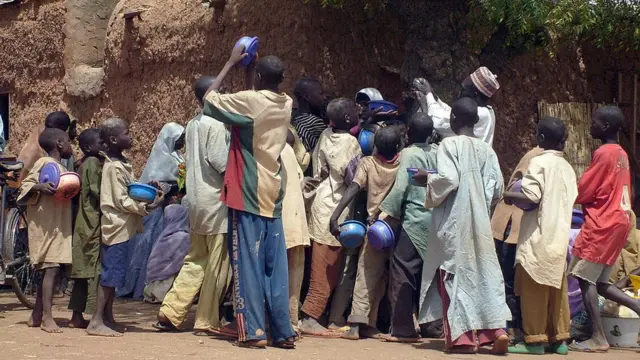
In January, I visited all the states of Nigeria’s North West to reassess the Almajiri situation before releasing any new publication.
This reassessment was deliberate. It was necessary to confront realities on the ground afresh, practically, not abstractly.
This is not an academic exercise for me. Growing up, I lived among Almajiri children. Yet, even with lived experience, I have come to accept that academic and policy perspectives can still miss critical truths when they are detached from present realities. The Almajiri crisis has evolved, and our responses have not evolved with it.
One of the most persistent misconceptions is that the Almajiri crisis is fundamentally an education deficit. Our recent PeacePro survey across the North West challenges this assumption.
Among the Almajiri children surveyed, just a little over 20% demonstrated any meaningful Islamic knowledge. The sample size was modest, but the implications are troubling. If the survey were expanded, the figure might drop to 10% or lower.
This finding is significant for two reasons.
Our respondents were largely older Almajiri, many of whom had spent years in the system before it became this worse.
Secondly, younger Almajiri are even more disconnected, hit differently by deprivation, displacement, and insecurity.
What this tells us is simple but uncomfortable, the majority of today’s Almajiri are neither being educated nor religiously instructed in any substantive sense. They are not students. They are abandoned children surviving within a system that no longer delivers what it claims to represent.
Approaching the Almajiri crisis primarily through formal education, classrooms, curricula, certificates, misses the point.
Many of these children are already adolescents or young adults. For them, conventional schooling is neither realistic nor immediately relevant.
Policy that insists on “education first” risks producing a new category of failure, children forced into systems that neither meet their needs nor reflect their realities.
Across the North West, we drove for hours, sometimes over four hours, across vast land masses with no meaningful infrastructure or productive use. This is not empty land; it is wasted opportunity.
These spaces can be transformed into large scale agricultural and vocational training hubs, absorbing thousands of Almajiri children and youth across entire value chains.
Crop production
Livestock management
Agro-processing
Storage, logistics, and distribution
Basic mechanics and tool handling
Such hubs would not merely “rehabilitate” Almajiri children, they would equip them with productive skills that immediately translate into livelihoods, even without formal education.
In Katsina and Zamfara, the mining curse is unmistakable. I witnessed illegal mining activities spread across wide areas, often operating openly. In the same spaces, I saw guns carried on motorcycles, largely by young Almajiri recruits.
The connection is direct.
These children possess only one marketable skill: physical labour, digging. In such an environment, Illegal mining becomes employment. Armed groups become recruiters and Violence becomes an income stream.
Even well intentioned interventions can backfire.
Introducing mechanized drilling, for example, threatens their only source of livelihood. When survival is at stake, reform is perceived as hostility.
For the almajiri children, we need to shift from focusing on schooling to dignified livelihoods.
The Almajiri system cannot be solved by Nigeria’s current education framework alone.
What is required is a massive vocational and livelihood oriented intervention, deliberately designed for children and youth who may never pass through formal schooling.
The objective must be clear, dignity without dependency,
Livelihood before literacy and
Skills before certificates.
Then, Education can follow.
Finally, the Almajiri crisis is not merely about out of school children. It is about social abandonment, economic exclusion, and state failure across vast territories.
If Nigeria continues to treat Almajiri strictly as an education problem, we will continue to misdiagnose and therefore mismanage the crisis. What is needed is a bold, practical reimagining, one that turns neglected land into productive space, abandoned children into skilled contributors, and insecurity into opportunity for social reconstruction.
PeacePro’s reassessment confirms one thing clearly, the future of the Almajiri must be built with tools, land, skills, and dignity, not classrooms alone.
Abdulrazaq Hamzat is the executive director of PeacePro